Budget hosting at £2-3 a month looks like a bargain. The signup page promises unlimited everything, free SSL, and 24/7 support. You hand over your card details, install WordPress, and get on with running your business.
Then things start to go wrong. Pages load slowly. Your site goes down on a Tuesday afternoon and nobody at support picks up for four hours. A plugin vulnerability gets exploited because updates weren't applied. A customer emails to say your checkout page showed a security warning.
We've been hosting WordPress sites for UK businesses since 2002. The pattern is always the same: someone moves to us after cheap hosting cost them far more than the monthly fee they thought they were saving. Here's where the real money goes.
Speed Costs You Sales
Cheap shared hosting stacks hundreds of sites onto the same server. Your WordPress site shares CPU, memory, and disk I/O with everyone else. When another site on that box gets a traffic spike, your pages slow down. You have zero control over it.
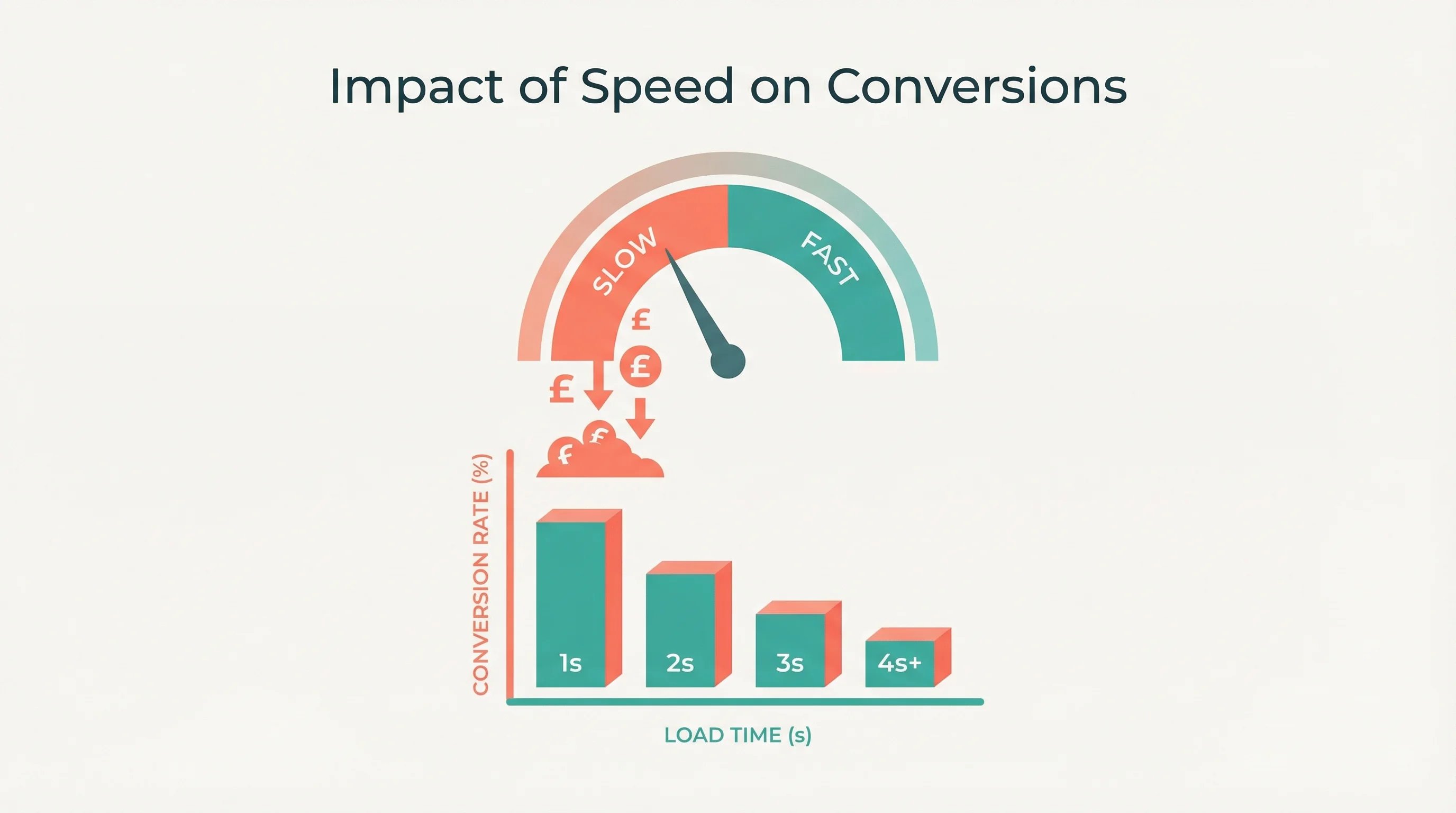
The numbers are brutal. A joint study by Deloitte and Google analysed 30 million user sessions across 37 brand websites and found that just a 0.1-second improvement in load time increased retail conversions by 8.4% and average order values by 9.2%. For travel sites, the conversion lift was 10.1%.
Google's own data shows the probability of a visitor bouncing increases 32% as page load time goes from one second to three seconds. Push it to five seconds and that jumps to 90%.
"2 seconds is the threshold for ecommerce website acceptability. At Google, we aim for under a half second."
Maile Ohye, Google, Site Performance for Webmasters
I first came across that quote years ago and it stuck with me because of how blunt it is. Two seconds. Not five, not ten. Two. And that was Google's public threshold, not their internal target. Running a hosting company for over two decades has shown me that most budget hosting plans can't consistently hit that number, especially during peak traffic hours. The sites we migrate to our managed WordPress hosting typically see Time to First Byte drop by 50-70% within the first week.
If your ecommerce site processes £100,000 a year and you're losing 8% of conversions to slow loading, that's £8,000 in revenue you're leaving on the table. Your £3/month hosting bill looks different when you frame it that way. We dug into why hosting is the real conversion differentiator that nobody talks about.
We covered this in detail in our WordPress speed guide, but the short version is: your server is the foundation. No amount of caching plugins will fix a slow server underneath.
Security Gaps Cost Real Money
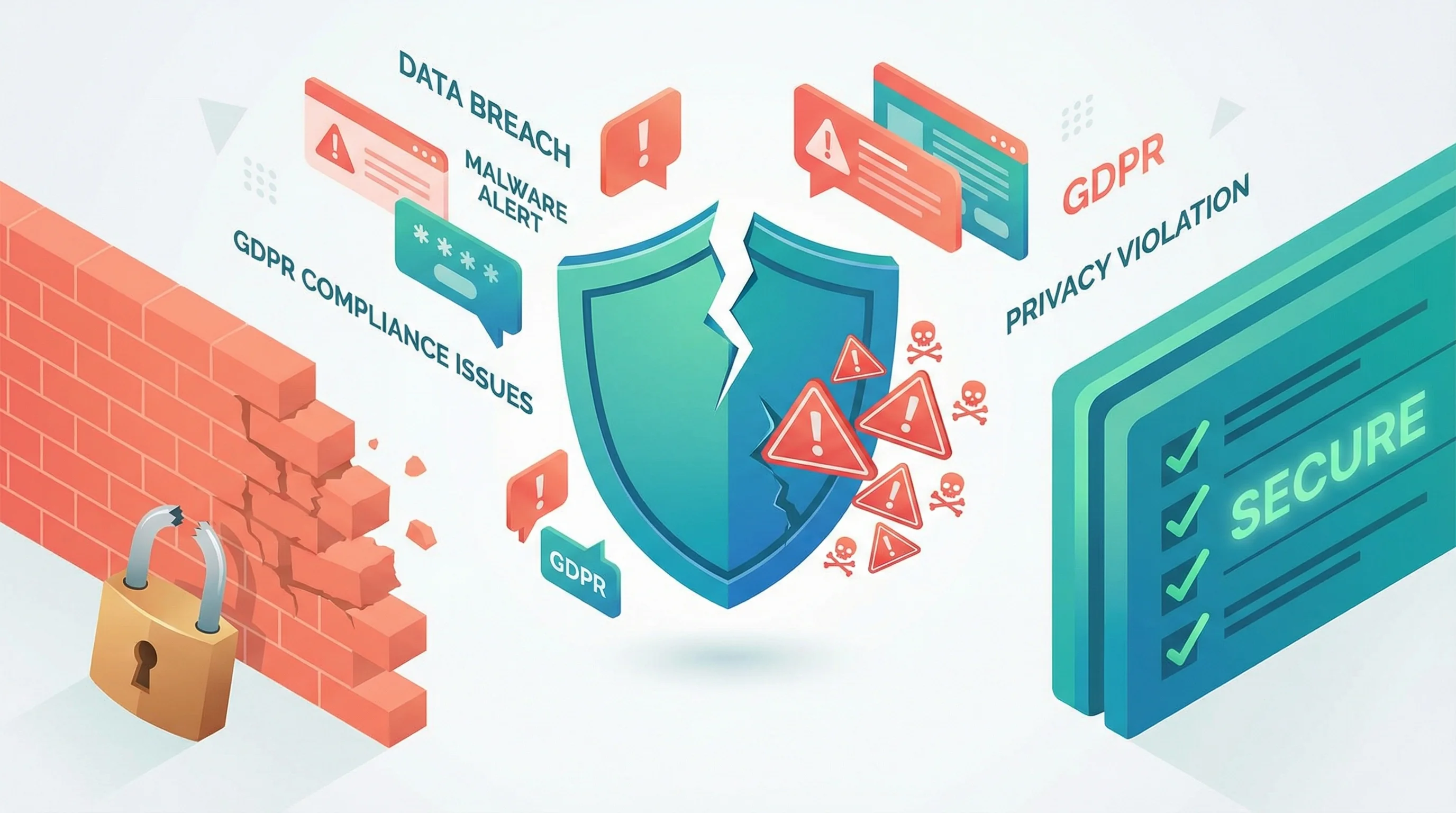
WordPress security isn't optional, and budget hosting providers do the bare minimum. Wordfence's 2024 security report counted 7,966 new WordPress vulnerabilities, a 68% increase over the previous year. The average WordPress site gets attacked every 34 minutes. Wordfence blocked over 54 billion malicious requests in 2024 alone.
Cheap hosting gives you shared server space and maybe a basic firewall. What it doesn't give you is automatic malware scanning, proactive patching, or anyone watching your site at 2am when an attacker finds a zero-day in a popular plugin.
When a site gets hacked, the cleanup bill lands between $500 and $2,500 per incident. Sucuri reported that over 500,000 websites were infected in 2024. But the cleanup is only the start. Factor in the hours you spend dealing with it, the customers who see the "Deceptive Site Ahead" warning, and the Google ranking penalty that can take months to recover from. Total costs for a small business typically exceed $25,000 when you include lost revenue and reputation damage.
Then there's GDPR. If customer data gets exposed because your hosting provider's security was inadequate, the ICO can act. Our WordPress security and GDPR checklist walks through the practical steps. In the first half of 2025, the ICO issued six fines totalling £5.6 million, double the entire amount collected across all of 2024. The maximum fine sits at £17.5 million or 4% of annual turnover, whichever is higher.
Small businesses aren't exempt. The ICO uses proportionate enforcement, but "we used cheap hosting" isn't a defence when personal data gets breached. Our secure hosting infrastructure includes DDoS protection, malware scanning, and daily backups because these aren't optional extras. They're baseline requirements. We covered the biggest risks in our article on critical WordPress vulnerabilities under active attack.
Downtime: Every Minute Has a Price
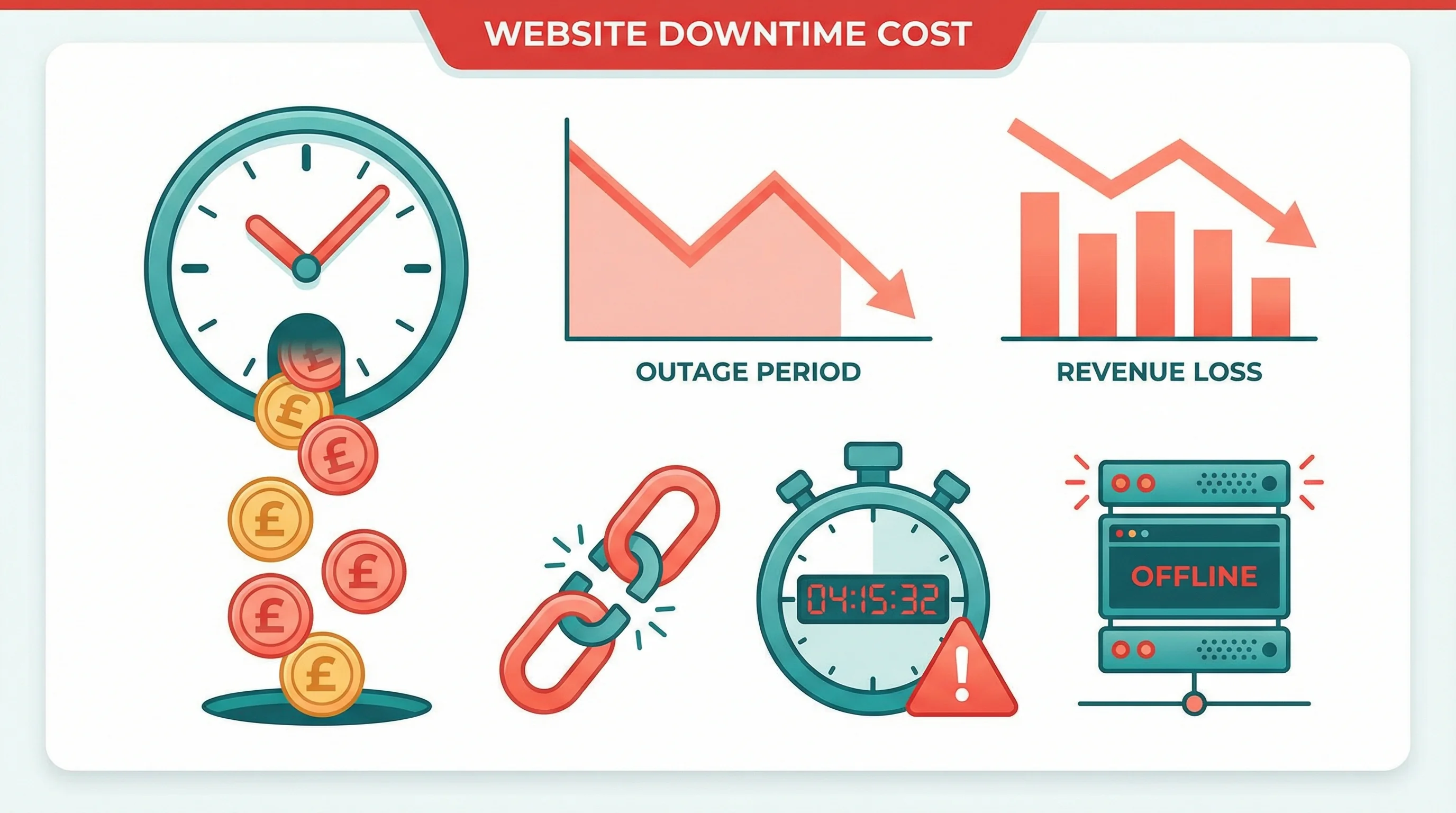
Budget hosting providers quote 99.9% uptime. Sounds good until you do the maths: 99.9% uptime still means 8.7 hours of downtime per year. And that's the promise, not the reality. Shared hosting environments are more prone to neighbour-induced outages where someone else's traffic spike or misbehaving script takes down the whole box.
Research by Cradlepoint found that UK businesses experience downtime costs of £350 to £7,400 per minute, depending on size and sector. For SMEs with 11 to 50 employees, the median annual cost of website downtime is £7,500.
That's before you consider the indirect costs. A customer who can't reach your site during a planned purchase doesn't bookmark it and come back later. They go to a competitor. If your site goes down during a marketing campaign you've paid for, those ad clicks are wasted spend.
Managed hosting platforms use redundant infrastructure, automatic failover, and proactive monitoring to prevent downtime before it happens. The difference between a £5/month shared plan and a managed cloud server isn't just performance; it's whether your business stays online when it matters. We explored when the upgrade makes financial sense in our piece on cloud servers vs shared hosting.
The DIY Sysadmin Tax
With budget hosting, you're the system administrator. WordPress core updates, plugin patches, PHP version management, SSL certificate renewals, backup verification, database optimisation, spam filtering, caching configuration. All of it falls on you.
Most small business owners aren't technical. They learn just enough to be dangerous: enough to install a plugin, not enough to vet its code quality. Enough to click "Update All" in the WordPress dashboard, not enough to test on a staging site first.
Google's John Mueller has been clear that speed is a negative ranking signal for slow sites rather than a positive boost for fast ones. That's an important distinction. It means budget hosting actively penalises you in search results, and the technical work needed to compensate for it eats hours every month.
Those hours have a cost. If you value your time at £25/hour (conservative for a business owner) and spend 4 hours a month on hosting-related tasks that managed hosting would handle for you, that's £100/month in invisible cost. More than any managed hosting plan we offer.
Managed WordPress hosting handles the infrastructure so you don't have to. On our hosting platform, automatic updates, staging environments, daily backups, and server-level caching are included. You run your business. We keep the servers healthy.
Migration Pain: Why Switching Gets Harder
Here's something nobody tells you when you sign up for budget hosting: leaving gets harder every month you stay. Your site accumulates custom configurations, database quirks, and hardcoded paths. Email accounts get tied to the hosting provider. DNS settings point everywhere.
We've migrated hundreds of WordPress sites to our platform. The ones that come from quality hosting providers are easy enough. The ones coming from budget hosts? They're a mess. Corrupted databases, outdated PHP versions that break plugins, email setups that nobody documented, and .htaccess files held together with duct tape.
The migration itself is free when you move to 365i, and the process is simpler than most people expect. But the pain of untangling years of technical debt is real, and it gets worse the longer you wait. If you're reading this and already feeling uneasy about your current hosting, that instinct is worth listening to. You might also want to check what your hosting actually costs after year one once the introductory price expires.
The web design team at 365i Web Design often sees the same pattern: a business invests in a professional website redesign, then puts it on the cheapest hosting they can find. The site's potential gets bottlenecked by the infrastructure underneath it.
What Managed WordPress Hosting Actually Includes
The price gap between budget and managed hosting is smaller than most people think. But the gap in what you get is enormous. And now that WordPress 7.0 has launched (20 May 2026), that gap is wider.
| Feature | Budget Hosting (£2-3/mo) | Managed WordPress (£5-10/mo) |
|---|---|---|
| Server resources | Shared with hundreds of sites | Dedicated or isolated resources |
| WordPress updates | Manual (your responsibility) | Automatic with rollback |
| Backups | Weekly or none | Daily with one-click restore |
| Security scanning | Basic or none | Continuous malware scanning |
| SSL certificate | Free (basic) | Free (auto-renewed) |
| CDN | Not included | Included with edge caching |
| Staging environment | Not available | One-click staging |
| PHP version | Often outdated | Latest stable (PHP 8.3+) |
| Expert support | Generic ticket system | WordPress specialists, 7 days |
| DDoS protection | Minimal | Enterprise-grade |
The table above explains why the real question isn't "how much does hosting cost?" but "how much does bad hosting cost?" When you factor in lost sales from slow pages, security incident cleanup, downtime revenue loss, and hours spent on DIY server management, budget hosting typically costs UK businesses £5,000-£15,000 more per year than the sticker price suggests.
Our WordPress hosting plans start at £4.99/month and include everything in the right column. If you're running a WooCommerce shop or high-traffic site, the managed cloud servers scale resources automatically. Either way, you get the infrastructure your business depends on without the hidden costs that budget hosting smuggles in through the back door.
Already worried about your site's performance and security? Our free HTTP Header Inspector will grade your current hosting's security headers in seconds, and the Core Web Vitals guide on 365i Web Design walks you through checking your speed metrics. If the results concern you, get in touch and we'll review your setup for free.
Frequently Asked Questions
How much does managed WordPress hosting cost in the UK?
Quality managed WordPress hosting in the UK typically costs between £5 and £30 per month depending on traffic and storage needs. 365i plans start at £4.99/month. The difference between that and £2-3/month budget hosting is far less than the hidden costs of slow speed, poor security, and downtime.
Will cheap hosting make my website slow?
Almost certainly, especially during peak hours. Budget shared hosting stacks hundreds of sites on one server. When others get traffic spikes, your site slows down. Google research shows load times above 3 seconds cause 32% more visitors to leave.
Is budget hosting a security risk?
Yes. Budget hosting typically lacks automatic malware scanning, proactive patching, and DDoS protection. Wordfence reported 7,966 new WordPress vulnerabilities in 2024. Without managed security, your site is exposed to all of them.
Can I migrate from cheap hosting to managed hosting?
Yes, and the sooner the better. Migration gets harder the longer you stay on budget hosting because of accumulated technical debt. 365i includes a free self-service Migration Centre with every plan. We've written a step-by-step guide to what actually happens during a migration if you want the full picture.
Does my hosting choice affect SEO rankings?
Yes. Google uses Core Web Vitals as a ranking signal, and your server directly affects loading speed, Time to First Byte, and uptime. Google's John Mueller has confirmed that slow speed negatively impacts rankings rather than fast speed providing a boost.
What type of hosting should a UK small business choose?
For most UK small businesses running WordPress, managed WordPress hosting is the best balance of cost, performance, and peace of mind. If you're processing over £50,000 in online transactions or getting 50,000+ monthly visitors, consider a managed cloud server for dedicated resources.
How much does website downtime cost a small business?
UK SMEs with 11-50 employees lose a median of £7,500 per year to website downtime. The per-minute cost ranges from £350 to £7,400 depending on your sector. Budget hosting's shared infrastructure makes downtime more likely and recovery slower.
Stop Paying Hidden Hosting Costs
365i managed WordPress hosting starts at £4.99/month and includes daily backups, malware scanning, a global CDN, and expert support 7 days a week. No hidden costs, no DIY sysadmin work.
View WordPress Hosting PlansSources
Published: · Last reviewed: · Written by: Mark McNeece, Founder & Managing Director, 365i
Editorially reviewed by: Mark McNeece on · Our editorial standards