Saying things are dead... is dead.
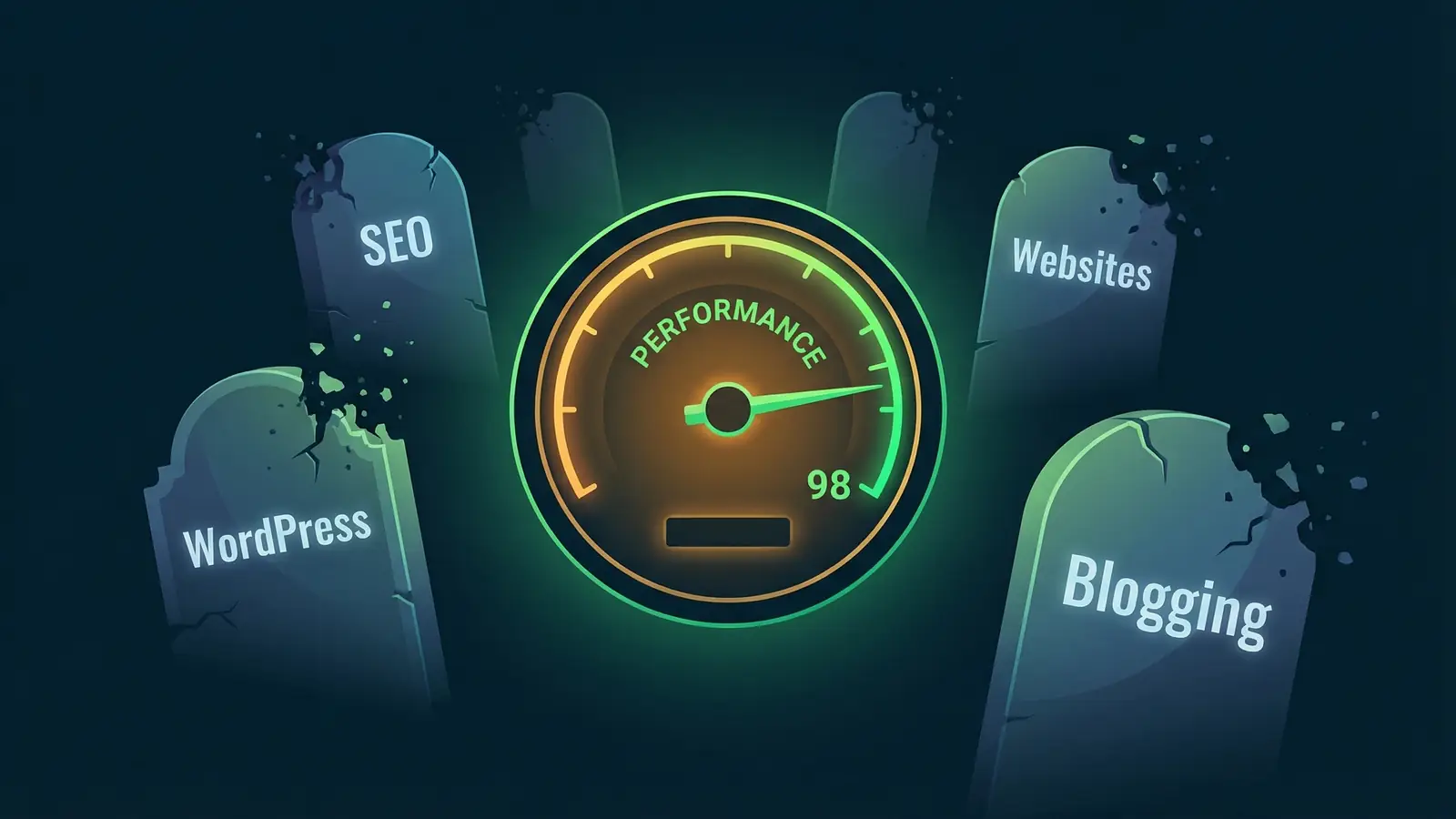
Every week, someone on LinkedIn announces the death of something. SEO is dead. Websites are dead. WordPress is dead. Google is dead. Blogging is dead. Email is dead. Apparently the internet has been dying since about 2005, and yet here we all still are, using it more than ever.
The "X is dead" post has become the most predictable format on the platform. Swap out the noun, add a hot take, watch the engagement roll in. It works because it makes people angry enough to comment. It doesn't work because it's almost never true.
And while people keep writing those posts, real businesses keep losing real customers for reasons nobody bothers arguing about on social media. Boring reasons. Infrastructure reasons. The kind of reasons that don't get likes.
Nothing Dies. It Just Changes.

SEO didn't die. It grew up. The tactics changed, the algorithms got smarter, and the people still gaming the system got filtered out. But businesses that publish useful content and build decent websites? They're doing fine.
Blogging didn't die either. It just stopped being called blogging. Now it's "content marketing" or "thought leadership" or "authority content". Same thing, fancier label.
WordPress didn't die. It powers 43% of the web and just shipped AI connectors in version 7. Some death.
Websites definitely didn't die. AI search tools like ChatGPT, Claude, and Perplexity need somewhere to pull their answers from. And that somewhere is your website. Even the "websites are dead" crowd still has a website. Usually with a newsletter signup form and a link to their course.
The thing nobody wants to admit is that none of this is very exciting to argue about. "Things keep changing and adapting" doesn't get 500 comments. "WordPress is dead" does.
The Stuff Nobody Writes LinkedIn Posts About
Here's what actually kills websites. Not trends. Not AI. Not some imagined shift in consumer behaviour. The thing that kills websites, quietly and without fanfare, is that they take too long to load.
That's it. That's the whole thing.
53% of mobile visitors abandon a page if it takes more than three seconds to load. Not thirty seconds. Three. That stat comes from Google's own research, and it's been validated repeatedly across industries.
The BBC discovered that for every additional second a page takes to load, 10% of their users leave. Not 10% of annoyed users. 10% of all users. Matthew Clark, the BBC's lead technical architect, shared that insight in an interview with Creative Bloq, and it changed how they build everything.
When I first read that BBC stat, I thought: we've been telling hosting customers this for years and most of them nod politely and then ask about the logo. The BBC builds some of the most-visited pages on the internet and they restructure their entire architecture around a one-second delay. Meanwhile, most small business websites are running on hosting that adds three or four seconds before the HTML even reaches the browser.
Sites that load in one second convert at 3x the rate of sites that take five seconds. Every additional second of delay costs roughly 7% in conversions. A Site Builder Report compilation of speed studies found that 70% of consumers say page speed directly affects their willingness to buy.
This isn't a ranking factor debate. It's a revenue question.
Your Hosting Is Your Conversion Rate

Your website's design gets all the attention. The colours, the layout, the hero image, the copy. And that stuff matters. But here's what nobody on the design side likes hearing: if the server takes five seconds to deliver all that beautiful work, most people will never see it.
The design is what convinces people. The hosting is what lets them see it.
Google's John Mueller put it well when talking about Core Web Vitals: "The other thing to keep in mind with Core Web Vitals is that it's more than a random ranking factor; it's also something that affects your site's usability after it ranks (when people actually visit)." That quote from a Search Engine Journal report cuts to the core of it. Rankings get you in front of people. Speed determines whether they stay.
Right now, only 41% of websites pass all three Core Web Vitals on mobile. More than half the web is failing the basic speed and stability test that Google uses to measure user experience. If your site is in the passing 41%, you've already got an edge over the majority of your competitors, and most of that edge comes down to infrastructure, not design.
I've been running a hosting platform since 2002. In that time, I've watched thousands of websites launch, grow, stall, and sometimes fail. The pattern is always the same. The businesses that treat hosting as a cost to minimise end up paying more in the long run: in lost customers, in emergency migrations, in the time spent fixing problems that better infrastructure would have prevented. We wrote about exactly this in our breakdown of the hidden costs of cheap hosting.
Five Signs Your Hosting Is Costing You Customers

You don't need a performance audit to spot the warning signs. If any of these sound familiar, your hosting is probably costing you more than you think.
1. Your site takes more than 3 seconds to load on mobile. Test it yourself. Open your phone, clear the browser cache, and load your homepage. Count. If you get to three before content appears, you're losing more than half your mobile visitors before they see a single word. Our HTTP Header Inspector can show you exactly what's happening behind the scenes.
2. You've had downtime you only found out about from a customer. If your first notification of an outage is an email from a client saying "your site's down", your hosting doesn't include proactive monitoring. Every minute of unplanned downtime is a minute where potential customers hit a blank page and go to your competitor.
3. Your Google PageSpeed score is below 50 on mobile. A score below 50 means your site is in the bottom tier of web performance. Some of that is code and images. But a lot of it is server response time, and that's pure hosting. You can optimise your images all day long; if the server takes 2 seconds to respond, you're fighting with one hand tied behind your back.
4. Traffic is rising but conversions aren't keeping pace. This one's subtle. You're getting more visitors from search or ads, but the conversion rate is flat or falling. That's often a speed problem. As traffic increases, cheap shared hosting slows down because you're competing for resources with every other site on the server. More visitors, slower pages, fewer conversions.
5. You're paying less than £5 per month. There's a floor below which hosting can't deliver consistent performance. At that price point, you're sharing a server with hundreds of other websites, and your site's speed depends entirely on what everyone else is doing. It's like renting a desk in a shared office where everyone's playing music. You might get work done. But it's not ideal.
If you're nodding at two or more of those, it's worth looking at what managed WordPress hosting or managed cloud servers would actually cost. The difference between £5/month hosting and £15/month hosting is £120 a year. The difference in conversion rates can be worth thousands.
Speed Is Trust
This is the bit that's hardest to measure but easiest to feel. Fast websites feel professional. Slow websites feel amateur. You don't consciously think "this server response time is suboptimal." You think "this doesn't feel right" and you leave.
A fast website sends a signal: this business has its act together. A slow website sends the opposite signal, regardless of how good the content is.
And here's the thing about AI search that ties it all back together. ChatGPT, Perplexity, and Google's AI Overviews don't just read your content. They need to be able to crawl it quickly and reliably. If your server is slow or unreliable, bots get timeouts and move on. Your competitor's faster site gets crawled instead, and that's the answer the AI gives to the next person who asks. We've seen this play out with CDN-backed delivery making a measurable difference in how quickly AI crawlers process a site.
The web hasn't gone anywhere. SEO hasn't gone anywhere. WordPress hasn't gone anywhere. The businesses that invest in solid infrastructure, fast hosting, and reliable delivery keep winning, year after year, while the hot takes come and go.
Frequently Asked Questions
Does hosting really affect conversion rates?
Yes. Sites loading in one second convert at 3x the rate of sites taking five seconds. Every additional second of delay reduces conversions by roughly 7%. This is backed by data from Google, the BBC, and multiple e-commerce studies spanning thousands of websites.
How fast should my website load?
Under 3 seconds on mobile, ideally under 2. Google's Core Web Vitals set the bar at 2.5 seconds for Largest Contentful Paint (the point where your main content is visible). Anything above 3 seconds and you're losing more than half your mobile visitors before they see your page.
Is cheap hosting costing me money?
Probably. Hosting below £5/month puts you on shared servers with hundreds of other sites, and your performance depends on what they're all doing. The difference between £5 and £15 per month is £120 a year. If that faster hosting prevents even a handful of lost conversions, it pays for itself many times over.
What are Core Web Vitals and do they matter?
Core Web Vitals are Google's three metrics for measuring user experience: loading speed (LCP, under 2.5s), responsiveness (INP, under 200ms), and visual stability (CLS, under 0.1). Only 41% of websites pass all three on mobile. Passing them won't guarantee top rankings, but failing them means losing out to competitors with similar content who load faster.
Does page speed affect SEO rankings?
Speed is a ranking factor, but content relevance still matters more. Google's John Mueller has said Core Web Vitals act as a tiebreaker: when two pages have similar content quality, the faster one ranks higher. In practice, that tiebreaker applies to a lot of competitive searches where multiple pages cover the same topic.
Does site speed affect how AI search tools find my business?
Yes. AI crawlers from ChatGPT, Perplexity, and Google's AI Overviews need to fetch and process your pages. If your server is slow or times out, bots skip your site and pull answers from a faster competitor instead. A CDN and reliable hosting make your content consistently available to both human visitors and AI systems.
How can I test my website's speed for free?
Google's PageSpeed Insights (pagespeed.web.dev) tests your Core Web Vitals with real user data. GTmetrix shows waterfall breakdowns of what's loading and when. You can also use our free HTTP Header Inspector to check your server's response headers and security configuration.
Stop losing customers to slow pages
Our hosting platform delivers sub-second server response times with built-in caching, a global CDN, and unlimited resources on every plan. The boring stuff that makes the difference.
See WordPress Hosting PlansSources
Published: · Last reviewed: · Written by: Mark McNeece, Founder & Managing Director, 365i
Editorially reviewed by: Mark McNeece on · Our editorial standards