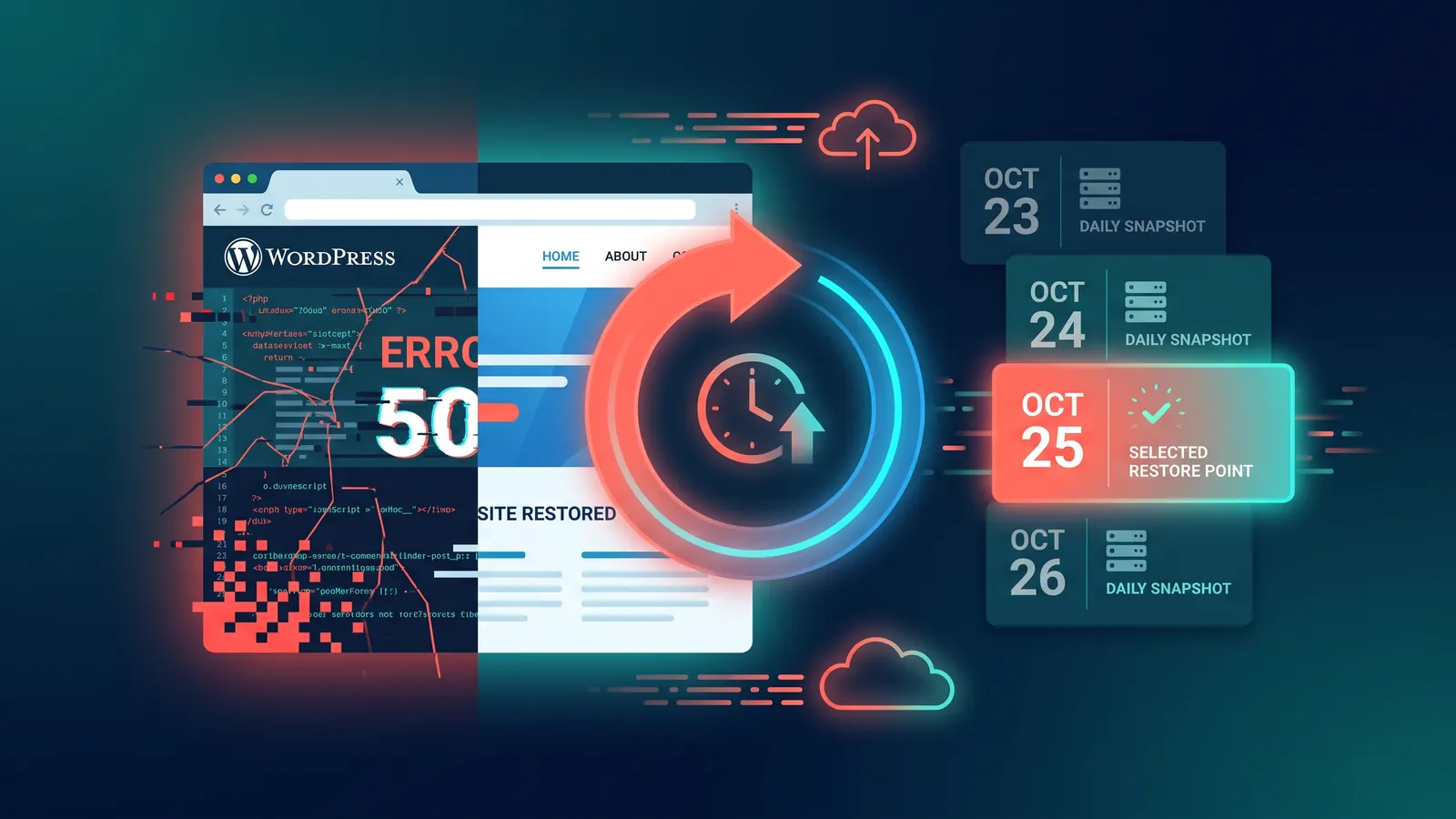
The real test of a WordPress host is the day WordPress itself changes. When WordPress 7.0 shipped, we had already tested the RC5 build on production-mirror staging sites, so we were confident enough to let the update run on schedule with no platform-level hold. Hundreds of sites moved from 6.9.x to 7.0 inside a few hours. Tickets raised: none. Rollbacks: none. White screens reported: none. Most customers found out because they logged in and saw the new version number. We do that for every major release, not just that one. WordPress 7 wants PHP 7.2.24 as a hard minimum with 8.3 or better recommended, unrestricted outbound HTTPS for the AI Provider plugins, and somewhere safe to test the upgrade. All three were already there.
That is possible because of what sits underneath. Every plan runs on an autoscaling cloud platform with unlimited LVE resources, which in plain terms means no CPU throttling, no memory ceiling and no cap on PHP processes. It matters more for WordPress than for anything else we host, because a real WordPress site is rarely just WordPress. It is WordPress plus a page builder plus twenty plugins, and those are exactly the sites that fall over on a host that meters you. PHP 8.5 and MySQL 8.0 are there when you want them, one click, with a way back if a plugin objects.
The longest answer I can give you about reliability is Richard Antrobus at Employment Law Solicitors. He has been on WordPress hosting with us since 2006: thousands of pages, heavy organic traffic, and he is currently planning his next build with us rather than his exit. Twenty years is not a metric I can put in a comparison table, but it is the one I would want if I were choosing.
When something does go wrong, you are not queueing. We have logged 515 tickets in the entire life of our helpdesk, counted on 22 August 2026, with none of them open that day. Across eleven timed tickets the median first reply was under five minutes. Durga G. went live, lost her WordPress login and her email in one go, and was back in the dashboard 22 minutes after opening the ticket, with SSL enabled and maintenance mode switched off. We fixed the parts that were not even ours to fix.
Two things I like being precise about. The desk runs seven days a week with long hours, evenings, weekends and bank holidays included, and it is staffed by the people who actually run the platform rather than a call centre working from a script. Separately, the data centre is monitored around the clock, so the infrastructure is watched even at three in the morning when the desk is quiet. And the price on the card is the price it stays: the first month is £1, and after that you pay the rate you were shown, not an introductory figure that quietly doubles at renewal.
One thing changed here this month, and it is the sort of change I like. Giving a developer access to a site used to be a ticket. Somebody asks, we do it by hand, then we do the whole thing in reverse when the job ends. It was quick work, but it sat between a customer and something they should never have needed our permission for. It is self-service now, on every plan, and we still get the email whenever it happens.
The point of paying for managed WordPress hosting is that the platform stays out of your way, and that when it does not, a person who knows the platform answers quickly. That is the whole product.