On 24 February 2026, a startup called Profound closed a $96 million Series C round at a $1 billion valuation. The company, which is barely 18 months old, has a single product: it tracks what AI systems like ChatGPT, Gemini, and Perplexity say about your brand. Lightspeed Venture Partners led the round, with Sequoia Capital and Kleiner Perkins also participating.
That's three of Silicon Valley's most selective venture firms betting real money on a single idea: businesses that can't control how AI talks about them will lose customers to those that can.
For UK small businesses, the signal is hard to ignore. The era of AI visibility as a niche concern is over. It's now a billion-dollar category with Fortune 500 backing, and the tools being built are priced for enterprises, not high street shops. The question for smaller firms is whether they'll be locked out of this shift entirely, or whether there's a way in.
What Profound Actually Does
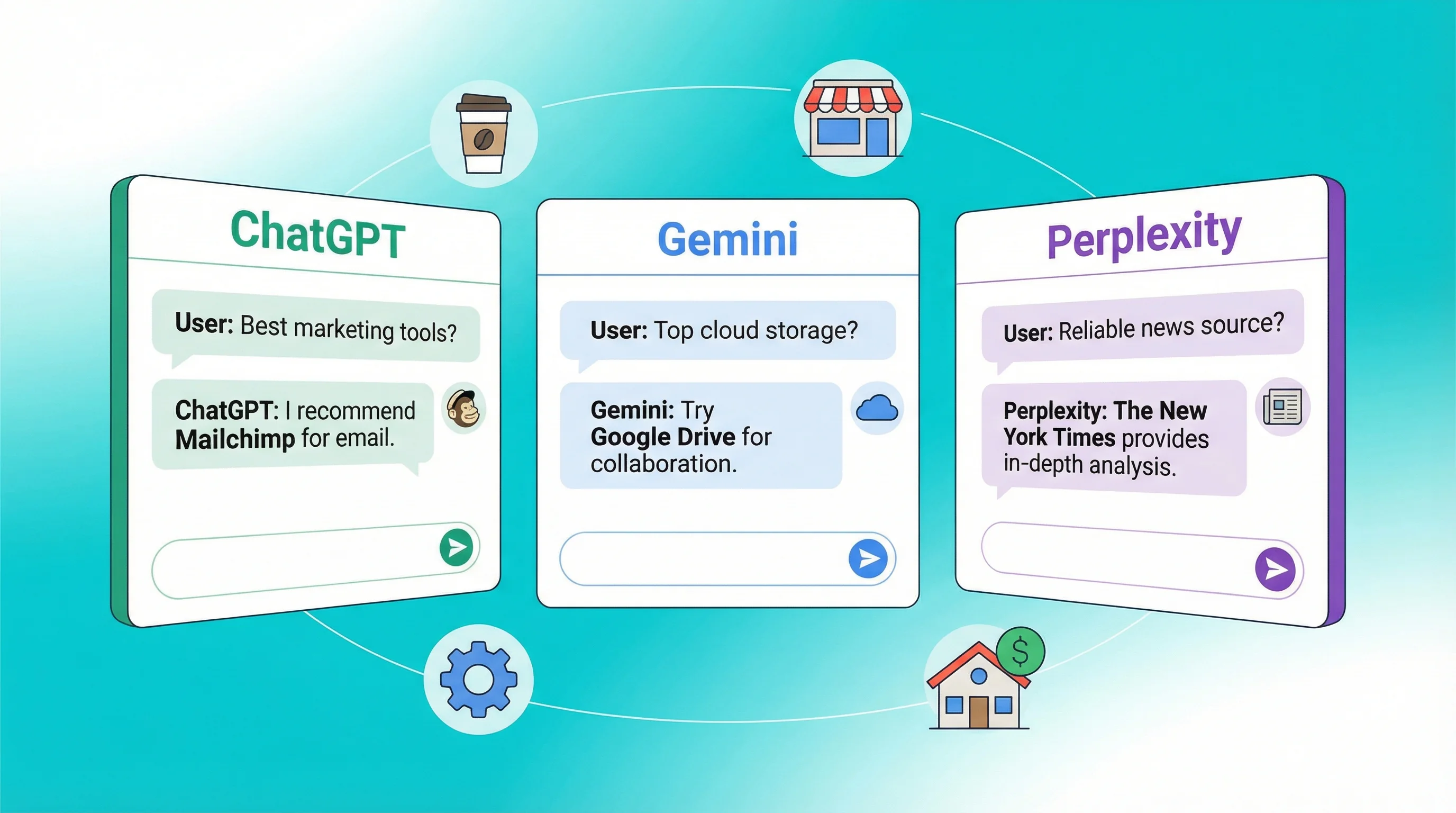
Profound monitors how AI answer engines describe, recommend, and rank brands. If you ask ChatGPT "What's the best project management tool?" and it recommends three competitors but not you, Profound tells you that happened and helps you figure out why.
The company already has more than 700 enterprise customers. Over 10% of the Fortune 500 use the platform, including Target, Walmart, Figma, MongoDB, U.S. Bank, and Plaid. According to the official announcement on GlobeNewsWire, Profound's research found that up to 90% of cited sources in AI answers change over time. Your brand might be recommended today and forgotten tomorrow.
James Cadwallader, Profound's CEO, put it bluntly: "AI Search is the biggest platform shift in the history of marketing. In the future, every company on the planet will care deeply about how AI talks about and surfaces their brand."
Sachin Patel, Partner at Lightspeed Venture Partners, explained the investment thesis: "There's this massive migration happening, where consumer attention is moving from search engines into answer engines." As Fortune reported in its exclusive coverage, the round also funds "Profound Agents," autonomous AI workers that can execute marketing campaigns across AI platforms on a brand's behalf.
The Two-Tier AI Visibility Problem
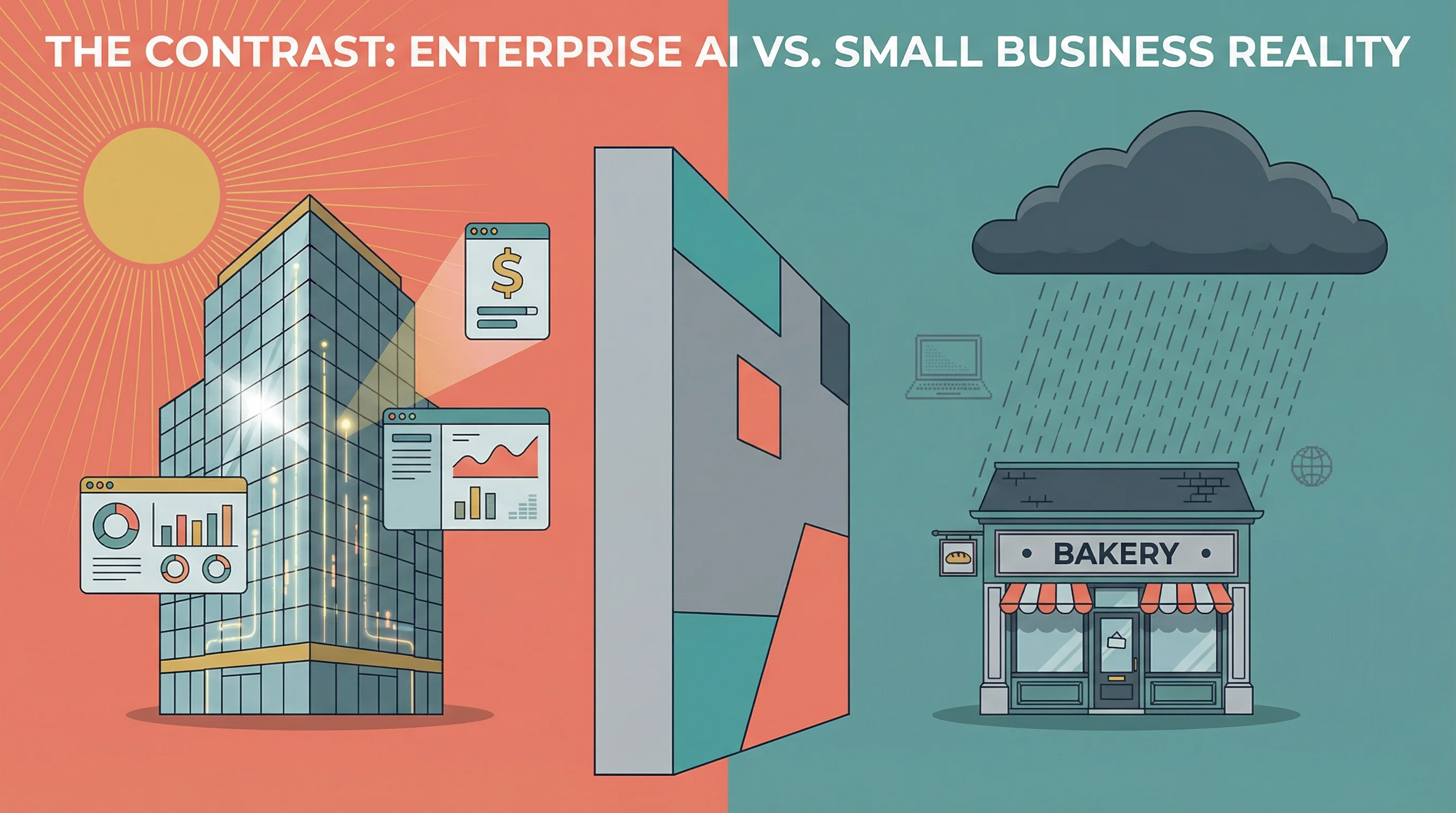
Here's the problem nobody is talking about. Profound's customers are Walmart and Target. The platform is priced for companies with dedicated marketing teams and six-figure software budgets. The same is true of competitors like Brandwatch's AI monitoring tools and Semrush's AI answer tracking.
A UK plumber, estate agent, or independent retailer can't spend £5,000 a month on AI visibility software. But they're just as affected by the shift. When a potential customer asks ChatGPT "best plumber in Kettering" and the AI doesn't mention your business, you've lost that lead before your website even loaded.
Our research from January found that 99.7% of UK websites have zero AI discovery files. That figure hasn't changed much since. The enterprises are racing ahead with billion-dollar tools, and the rest of the market hasn't started.
This isn't a technology gap. It's an awareness gap. Most small business owners don't even know AI systems are making recommendations about their industry, let alone that they can influence those recommendations.
Why Traditional SEO Alone Won't Cut It
If your instinct is "I already do SEO, so I'm fine," it's worth understanding what's different here. Traditional search engine optimisation gets your website into Google's index. AI visibility is about getting your brand into a language model's knowledge.
Those are two different things. Google crawls your website and indexes pages. AI models synthesise information from multiple sources to form a view of your business. If the only information about your company exists on your website, and your website doesn't tell AI crawlers what your business actually does in a format they understand, you're invisible to the growing number of people who ask AI for recommendations instead of typing into Google.
The connection between traditional SEO and AI visibility is real, though. Strong organic rankings do help. If your site ranks well in Google, AI systems are more likely to encounter your content during training. But it's not enough on its own. AI models also pull from reviews, directories, social media profiles, and AI discovery files like llms.txt and ai.json that explicitly describe your business for machine consumption.
The businesses winning in AI search are doing both: maintaining strong SEO foundations and building an AI-readable identity layer on top.
What UK Businesses Can Do Right Now
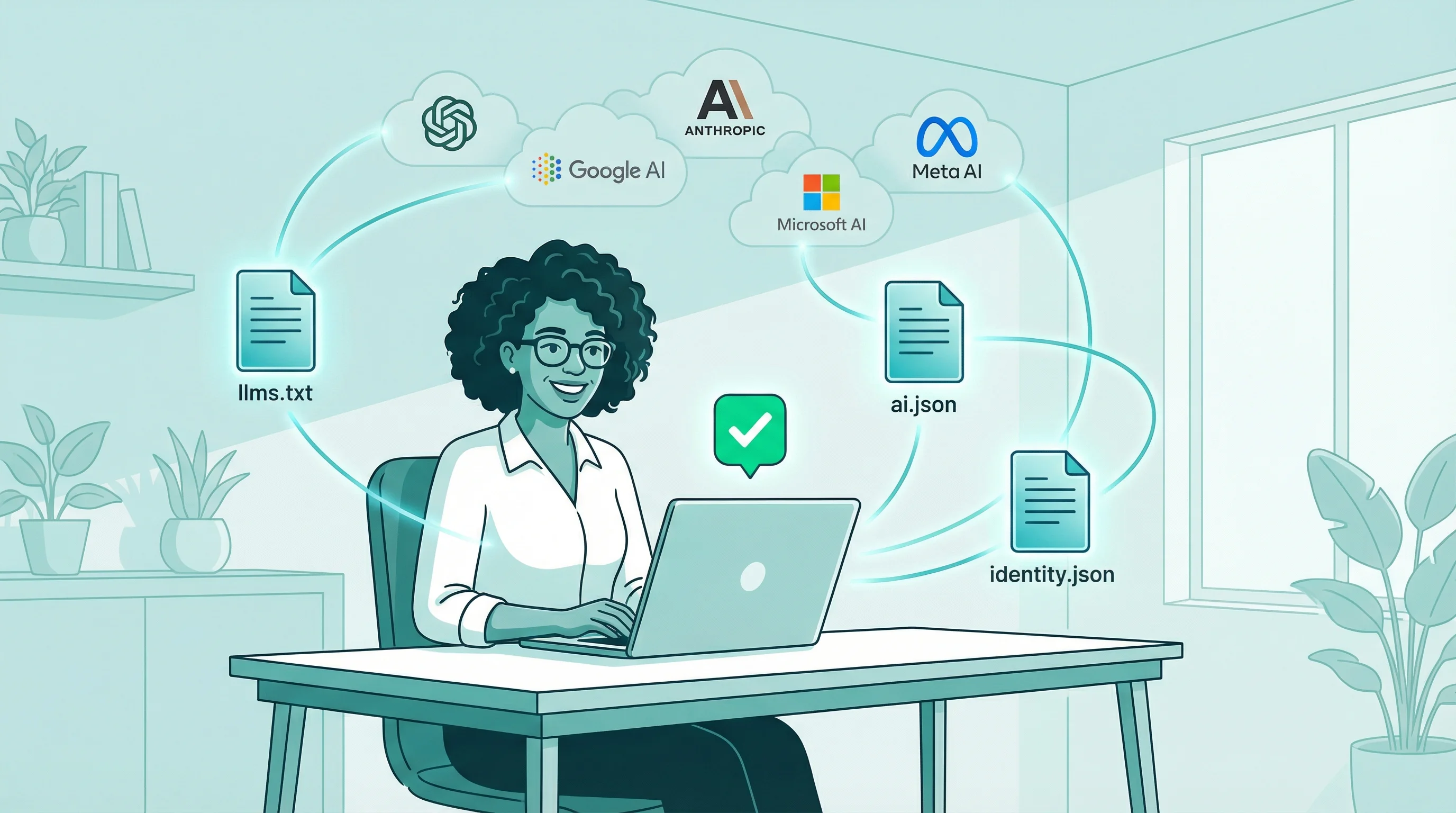
You don't need a $96 million platform to start. The infrastructure that AI systems use to learn about businesses is open and free. Here's where to begin.
1. Check where you stand today. Before doing anything else, see how visible your business already is to AI. The AI Visibility Checker scans your domain and tells you exactly what AI systems can and can't see. Most businesses score zero. Knowing that is the first step.
2. Create your AI discovery files. These are simple text and JSON files you add to your website's root directory. They tell AI crawlers your business name, what you do, who you serve, and how to describe you. We've published a step-by-step guide to creating AI discovery files that covers llms.txt, ai.json, identity.json, and the other file types. Once they're live, test what AI actually sees to make sure everything works. If you'd rather have them created for you, our AI Discovery Files Service handles the whole process.
Generate AI Discovery Files from your dashboard
Using WordPress? Install the plugin and create all 10 files in minutes. No coding, no configuration files to edit manually.
Get the Plugin →3. Claim your free directory listing. The AI Visible Directory lists every UK domain that implements AI discovery files. Sites with two or more files get a full page listing with a dofollow backlink. It's free, and it adds another signal that AI systems can use to verify your business.
4. Structure your content for extraction. AI models favour content they can parse cleanly. That means clear headings, direct answers to common questions, FAQ sections with specific responses, and proper schema markup. Think of it as writing for two audiences: humans who read, and machines that extract.
5. Keep your hosting fast and crawlable. AI crawlers have timeouts, just like search engine bots. If your server responds slowly, the crawler moves on. Fast, reliable web hosting with proper server configuration means AI bots can actually reach and read your content. A site that loads in under two seconds gives crawlers plenty of time to index your AI discovery files.
What to Watch
Profound's $1 billion valuation is a milestone, but it's early days. The company has fewer than 120 employees and its product is still evolving. The "Profound Agents" feature, which automates marketing execution across AI platforms, launched alongside this funding round and hasn't been tested at scale.
The broader market is moving fast, too. Google's AI Mode is changing how search results appear. ChatGPT started showing ads last week, adding a paid layer on top of its organic recommendations. Perplexity has its own advertising programme in testing. The organic window for influencing AI answers will narrow as paid placements grow.
For UK businesses, the practical takeaway is this: the companies that build their AI presence now, while the tools are free and the space is uncrowded, will have an advantage over those that wait. The enterprises are already spending millions. But the basic building blocks of AI visibility, including discovery files, structured data, and directory listings, cost nothing and take hours, not months, to implement.
The $1 billion bet has been placed. The question isn't whether AI visibility matters. It's whether you'll act before the gap between those who have it and those who don't becomes too wide to close.
Frequently Asked Questions
What is AI visibility and why does it matter?
AI visibility is how accurately and prominently AI systems (ChatGPT, Gemini, Perplexity, Claude) describe and recommend your business. When someone asks an AI assistant for a recommendation in your industry, AI visibility determines whether you're mentioned. As more consumers use AI for purchasing decisions, businesses without AI visibility lose leads before their website is even visited.
What is Profound and why did it raise $96 million?
Profound is a startup that monitors what AI answer engines say about brands. It tracks recommendations across ChatGPT, Gemini, and Perplexity, helping companies understand and influence their AI presence. The $96M Series C, led by Lightspeed Venture Partners at a $1B valuation, funds expansion into "Profound Agents," which automate marketing execution across AI platforms.
Can small businesses compete with enterprises on AI visibility?
Yes, but through different methods. Enterprise platforms like Profound cost thousands monthly and are designed for Fortune 500 budgets. Small businesses can build AI visibility for free using AI discovery files (llms.txt, ai.json, identity.json), structured data, consistent online presence, and directory listings. The technology is open and accessible.
What are AI discovery files?
AI discovery files are machine-readable text and JSON files placed in your website's root directory. They include llms.txt (a plain-text business summary for language models), ai.json (structured data about your services), identity.json (brand identity information), and several others. They tell AI crawlers exactly who you are, what you do, and how to describe your business in recommendations.
Does good SEO automatically give you AI visibility?
Strong SEO helps but isn't enough alone. AI models do pull from well-ranked content, so good organic search performance gives you a head start. But AI systems also synthesise information from reviews, directories, social profiles, and AI discovery files. You need both: a solid SEO foundation plus an explicit AI-readable identity layer describing your business for machines.
How can I check my business's AI visibility right now?
Use the free AI Visibility Checker to scan your domain. It analyses whether your site has AI discovery files, how well your content is structured for AI extraction, and what AI systems can currently see about your business. Most UK websites score zero, which means there's an immediate opportunity to get ahead of competitors.
How long does it take to implement AI discovery files?
A basic set of AI discovery files can be created and deployed in a few hours if you follow a guide. The core files (llms.txt, ai.json, identity.json) require writing descriptions of your business and saving them to your website's root directory. For businesses that prefer a hands-off approach, professional services can create all file types and deploy them within a few days.
Will AI search replace Google entirely?
Not in the near term. Google still handles billions of searches daily and has launched its own AI Mode to stay competitive. What's happening is a split: some queries are moving to AI assistants while traditional search continues. Businesses need to be visible in both channels. The risk isn't that Google disappears but that a growing share of high-intent queries shifts to AI platforms where you're not present.
Find out how AI sees your business
Most UK websites are invisible to AI assistants. Our free checker scans your domain and shows you exactly what ChatGPT, Gemini, and other AI platforms can see. Takes 30 seconds.
Check Your AI VisibilitySources
- Profound Raises $96M Series C at $1B Valuation to Build Marketing Infrastructure for the Agentic Internet - GlobeNewsWire (24 February 2026)
- As AI threatens search, Profound raises $96 million to help brands stay visible - Fortune (24 February 2026)
- Profound raises $96M Series C for AI search visibility platform - SiliconANGLE (24 February 2026)
Published: · Last reviewed: · Written by: Mark McNeece, Founder & Managing Director, 365i
Editorially reviewed by: Mark McNeece on · Our editorial standards