The Internet Corporation for Assigned Names and Numbers opens its first major new domain extension round in 14 years on Wednesday 30 April 2026. The window runs for 105 days, closing on 12 August. The application fee is USD 227,000, and the total all-in cost for a successful applicant typically runs between £400,000 and £900,000 over the first three years. If you run a UK small business, this is a news story, not a to-do list item.
We sell domains. Have done since 2002. Today our catalogue covers 458 top-level domain extensions. .food and .realestate both went live this week. For every UK small business we help get online there's a simple sequence: pick a name, pick an extension, register it, start using the free 10GB mailbox that comes with it. That sequence doesn't involve spending a quarter of a million dollars to invent a new extension. Almost all of the launch-day coverage is written for the people who are.
What happens on 30 April
ICANN opens the TLD Application Management System (TAMS) at 00:00 UTC on 30 April 2026. Any eligible legal entity, so a corporation, government body, or non-profit, can lodge an application for a new generic top-level domain. That's the bit to the right of the final dot. Think .google, .bbc, .london, or a brand new string nobody has used before.
The round closes on 12 August, giving applicants 105 days. Evaluation, contention resolution, and eventual delegation typically take 18 to 36 months, so the first extensions from this round aren't expected to reach public registration until late 2027 or into 2028. Some dotBrand extensions will never open to the public at all.
A few policy changes matter. Closed generics (where one company owns a generic word like .book or .music) are prohibited. Private contention deals are banned, with all competing applications forced to an ICANN-run auction. Pre-approved Registry Service Providers, including UK registry Nominet, can fast-track the technical evaluation.
As the Morgan Lewis corporate team noted in their March pre-flight brief:
"The next gTLD application window is expected to open April 30, 2026. This will be the first opportunity to apply for new gTLDs since 2012."
Morgan Lewis corporate team, Morgan Lewis publication, 19 March 2026.
Morgan Lewis go on to describe the obligations for applicants: "significant financial, technical, and operational commitments" for any serious bid. That's the honest framing.
Why this round isn't aimed at you

Who's the round aimed at? Three groups. Global brand owners who want to control their own namespace the way Barclays runs nic.barclays and Google runs .google. Cities, regions, and cultural bodies that want a geographic extension like the successful .london, .scot, or .wales. And industry collectives with deep enough pockets to operate a registry on behalf of members, sometimes a decade into the future.
Andrew Allemann of Domain Name Wire, who's covered the domain industry for over two decades, was blunt in his pre-launch breakdown:
"For most applicants, the legal, marketing, and technical expenses will significantly exceed the application fee itself."
Andrew Allemann, Editor, Domain Name Wire, 25 September 2024.
The 2012 round proved the point. Of the 1,930 applications submitted, fewer than 1,239 resulted in live extensions. Many of the dotBrands that were granted (think Maserati, Zippo, MetLife, Mont Blanc) were quietly allowed to lapse because the sponsoring executive left, marketing couldn't find a practical use, or the ongoing operating fees simply never justified themselves. A fresh industry survey published on 20 April 2026 by Simone Catania on CircleID found that "application and ongoing costs (40.5%) and marketing budgets (38%) are viewed as most significant obstacles" to participation. The people who can ride those obstacles are not sole traders.
ICANN runs an Applicant Support Programme that discounts the fee by up to 85% for qualifying applicants from underserved regions. A UK trading company selling to UK customers doesn't qualify. The effective entry price for a mainstream UK business sits firmly above £400,000, and that's before anyone has designed a sign.
What we see from the registrar side

Here's what over 20 years on the UK registrar side tells us about what small businesses actually want from their domain, versus what the ICANN round is selling:
We sign up three domains for every hosting account we take on. Many of those domain customers never add hosting. A big proportion (our own tracking says around 60%) pick up the domain purely to use the free 10GB mailbox that comes with it. That's the single biggest reason UK small businesses buy domains from us. Not to build an empire. To stop using john.smith.plumbing@gmail.com and start using john@johnsmithplumbing.co.uk. That one change, on its own, makes a business look twice the size.
A domain transfer isn't always painless. Many small business owners have never changed registrar before, and the paperwork (auth codes, nameserver swaps, contact verification, DNS cutover) can feel intimidating if IT isn't your day job. We take the position that the transfer is our problem to walk you through, not yours to figure out alone. A customer left this Google review on our reviews page two days ago after moving his domain across to us:
"I needed to move my domain from the current provider to a new one with excellent service and superb customer focus - especially as I'm pretty hopeless with the web management side of IT! I found the company that gave me all of that and more in 365i. Absolutely brilliant service and help right from the start - in fact even before the start because Mark helped me sort the whole process out before I'd signed up. Can't beat that. Recommended. 7 stars, 11/10."
Chris Reynolds, 5-star Google review posted April 2026. See all 365i client reviews.
That's the kind of help a UK small business actually wants: somebody who replies quickly, with exactly the bit of information needed to move a step forward. Not a quarter-of-a-million-dollar registry application.
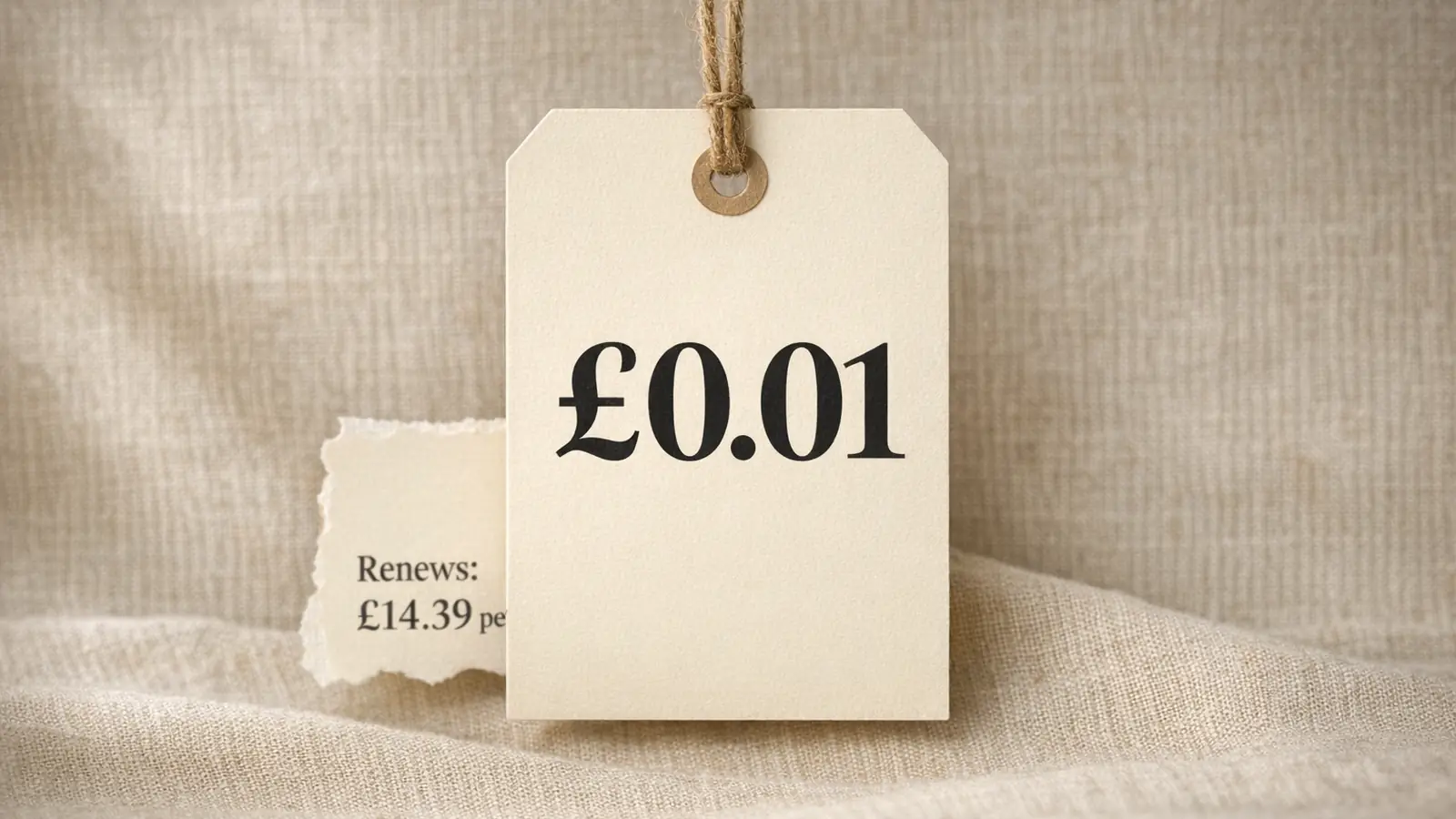
And not one customer has ever complained about our renewal price. The reason is simple: we don't hike it. What you pay in year one is what you pay in year ten. Every other mainstream UK registrar dangles a £0.99 first-year .co.uk and then lifts it to £12-£27 at renewal, as we documented in our analysis of UK domain renewal pricing. That quiet renewal creep is what a real domain strategy needs to plan for, not a £400,000 registry application.
What UK small businesses should actually do

Skip the 30 April headlines. Do these four things instead:
- Register on a familiar extension first.
.co.ukis the default for UK customers, with the short.ukvariant increasingly accepted as first-class..comstays useful if you trade internationally. Start with the familiar, then expand. - Match the extension to what you do. If you're a florist,
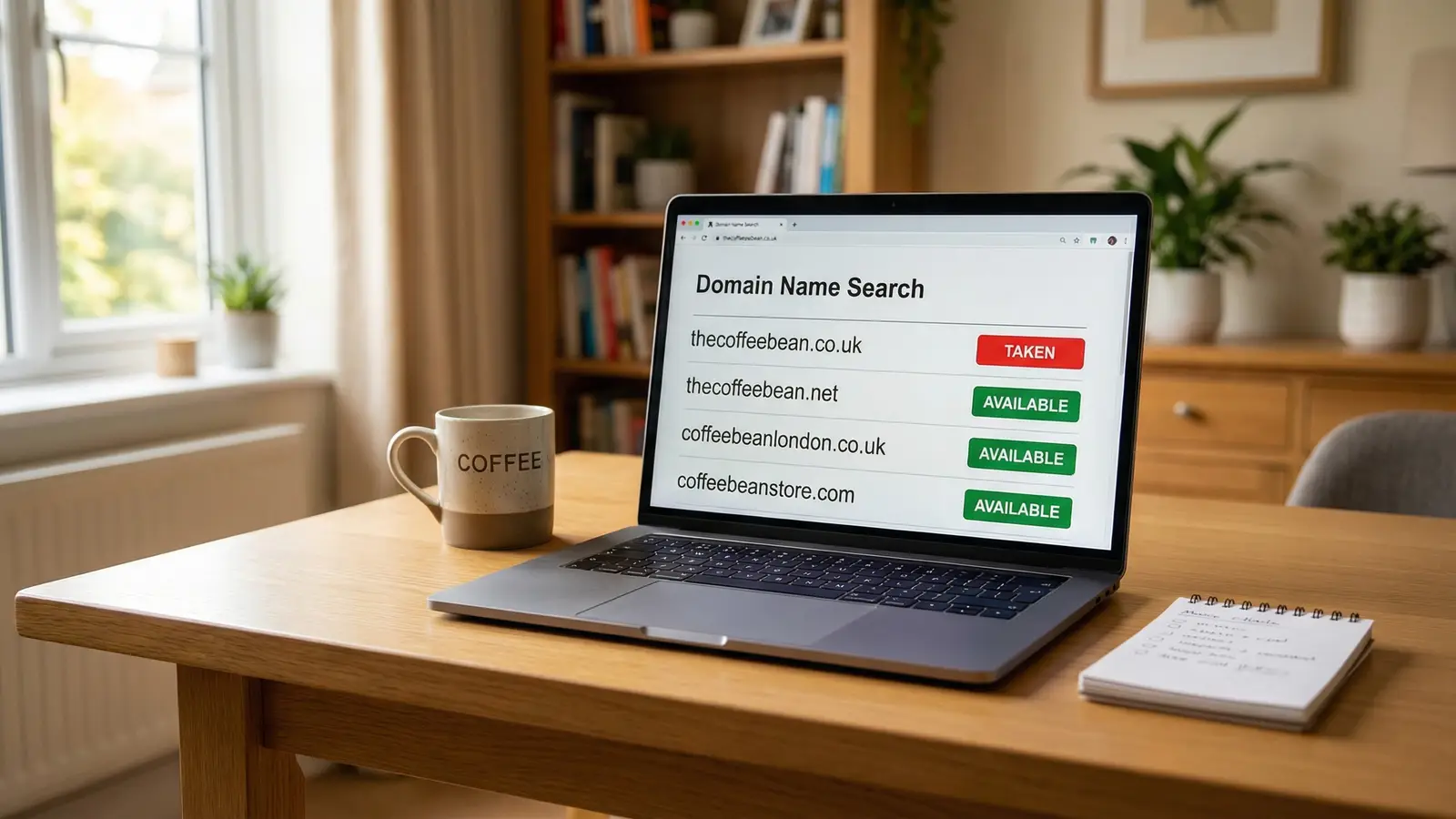
.flowersis available. A baker can take.bakery. A vet has.vet. Our new additions (.foodfor restaurants and caterers,.realestatefor agents) both went live this week. Browse the full 458-TLD catalogue if you'd rather pick by category. - Don't over-register. One or two extensions is normal. Three is cautious. Registering ten "defensive" variants of your name was an expensive mistake in the 2012 round and will be again in 2027. A better alternative for a taken name is almost always a slight rewording on a familiar extension.
- Plan for the renewal. Read the renewal price before you buy, not after. A domain is a recurring cost, not a one-off. If a registrar won't publish the renewal price, that's your answer.
Should you watch the round at all?
Yes, for three narrow reasons.
First, if you own a distinctive trademark, keep an eye on Reveal Day in October 2026, when ICANN publishes the full list of applied-for strings. If somebody has applied for a string that could be confused with your brand, you have a formal objection window. Your IP solicitor will know the process; the point is to watch.
Second, some of the granted extensions from this round will eventually become public generic TLDs, roughly 2027 to 2029. If your sector gets a new extension (think hypothetically a .accountant, .brewery, or .consultancy landing in the next two years), you'll want to decide whether your brand needs to be on it. That decision is a £40-£80-per-year one, not a £400,000 one.
Third, there's a slowly emerging AI signal. AI search tools and agents are starting to weight sources by trust signals, and a branded or sector-appropriate extension is a signal that is hard to fake. It's minor today but worth tracking. Our Q&A on AI visibility covers why the web address matters to AI systems in more detail.
For the 30 April opening itself? File it next to the weather forecast. It's news. It isn't action.
Frequently asked questions
Should my UK small business apply for a new domain extension in 2026?
No. The USD 227,000 application fee, the £400,000 to £900,000 three-year all-in cost, and the ten-year registry contract commitments put a new gTLD beyond any sensible UK SME budget. If a consultant is pitching an application to a small business, they're selling the wrong product.
How much does it actually cost to apply for a new gTLD in 2026?
USD 227,000 is ICANN's base evaluation fee. Most serious applicants budget £400,000 to £900,000 across the first three years once you include legal advice, trademark strategy, objection reserves, registry back-end provisioning, and annual ICANN fees of roughly USD 25,000. The Applicant Support Programme offers up to 85% off for qualifying applicants from underserved regions, but that doesn't apply to mainstream UK commercial applicants.
Can I register a new domain extension during the 30 April window?
No. The 30 April window is for applicants who want to operate their own extension, not for people registering a name on one. New public extensions from this round won't open for registration until evaluation, contention, and delegation are complete. Expect the first general-availability launches late 2027 through 2029.
Will new domain extensions affect my existing .co.uk or .com?
No. .co.uk remains the default choice for UK customers and carries no penalty from the new round. .com also holds its position globally. The 2012 round added over 1,200 new extensions and the original ones kept their value; the same will happen in 2027.
What are the best domain extensions for a UK small business today?
Start with .co.uk. It's what UK customers type without thinking. Add .uk if it's available, and .com if you trade internationally. After that, match a sector-specific extension to what you actually do: .shop, .food, .realestate, .vet, .photography, or one of the 458 options in our domain catalogue. Budget £9.99 to £68 a year per extension, ex-VAT.
What is a .brand domain?
A .brand is a private TLD where one company owns and operates the whole namespace. Nobody else can ever register a name on it. .google, .barclays, .bbc, and .bmw are the best-known examples from the 2012 round. In practice they're used as infrastructure and fraud defence, not marketing URLs.
When will the new extensions from the 2026 round be available to buy?
Expect the first public extensions to launch late 2027 through 2029. Evaluation, objections, contention auctions, and technical delegation typically take 18 to 36 months. Branded extensions usually stay private and never open to public registration.
Is 365i applying for its own gTLD in 2026?
No. We're a registrar, not a registry. Our job is to help UK small businesses pick and use domains well, which means offering the widest sensible catalogue (458 extensions and counting) at renewal-stable pricing. A .365i extension would serve us more than it would serve our customers, so it's a pass.
Looking for the right domain, not the biggest headline
458 domain extensions, no price hike at renewal, and a free 10GB mailbox with every domain. Start with .co.uk or browse the full catalogue by category.
Published: · Last reviewed: · Written by: Mark McNeece, Founder & Managing Director, 365i
Editorially reviewed by: Mark McNeece on · Our editorial standards
Sources
- 2026 Round General Information , ICANN New gTLD Program.
- New gTLD Application Window Expected to Open in April , Morgan Lewis, 19 March 2026.
- ICANN Says New Top-Level Domain Applications Will Be $227,000 , Domain Name Wire, 25 September 2024.
- The Domain Universe in 2026 , Simone Catania, CircleID, 20 April 2026.
- Nominet confirmed as Registry Services Provider for ICANN's New gTLD program , Nominet, 2 February 2026.
- 2012 Round Program Statistics , ICANN.