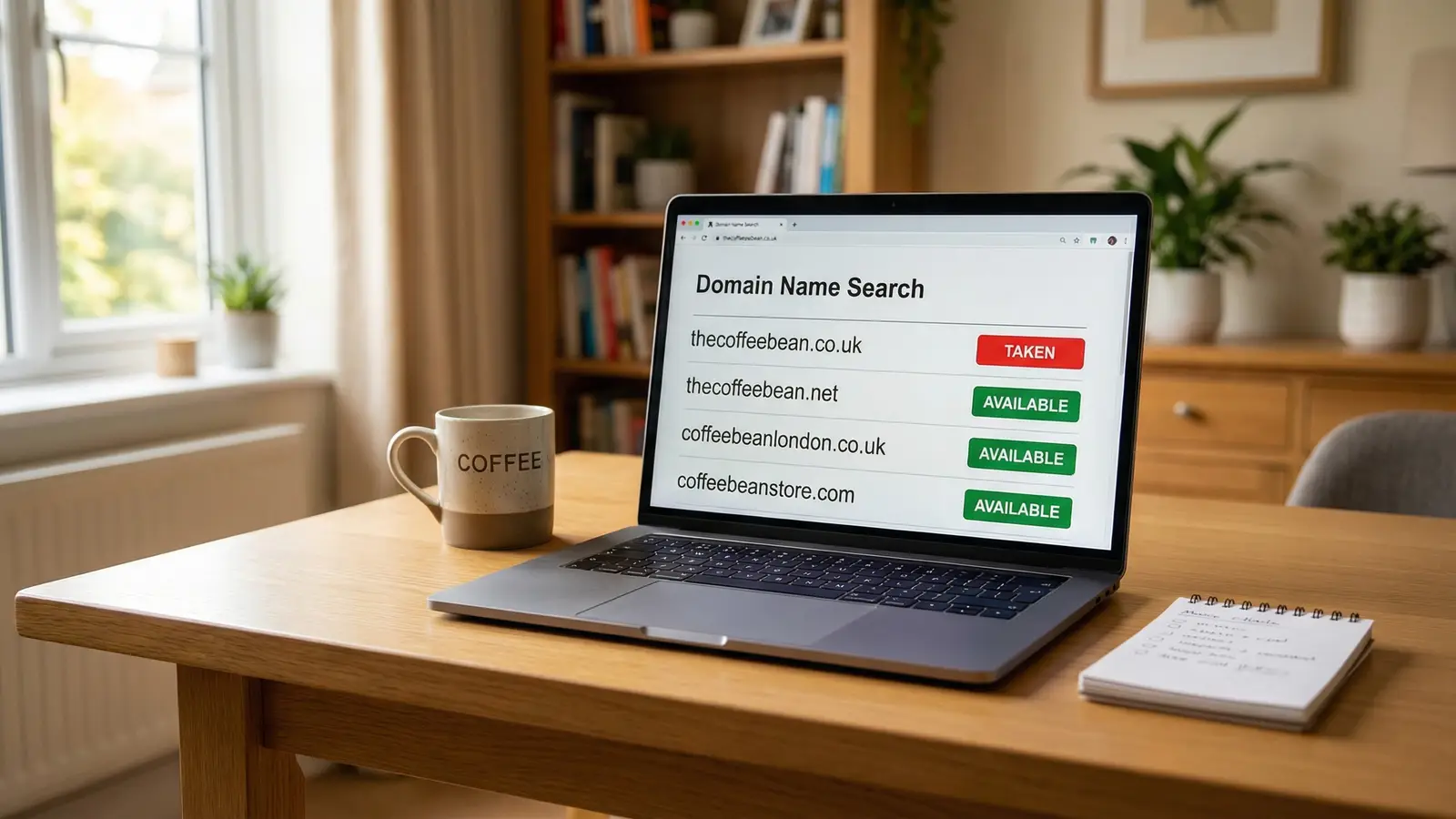
You've settled on the perfect business name. You type it into a domain search. Taken. That sinking feeling is universal, and with 378.5 million domains registered globally as of Q3 2025, it happens to almost everyone.
But a taken domain isn't a dead end. It's a fork in the road, and most of the paths are cheaper and faster than you'd expect. The trick is knowing which path fits your situation. (If you're still at the searching stage and want to check whether a domain is available properly, including trademark checks and domain history, that guide is worth reading first.)
Find Out What You're Actually Dealing With
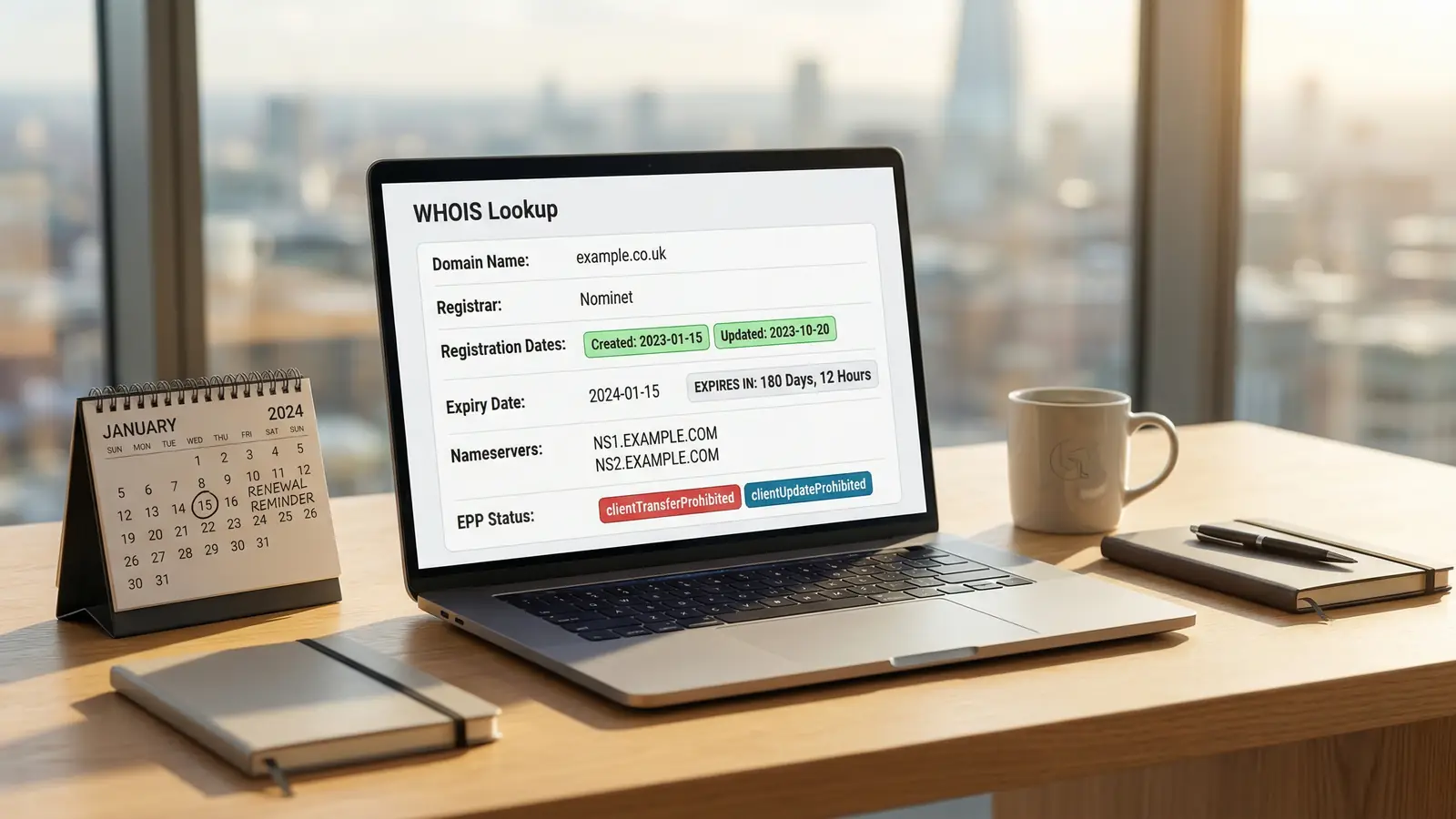
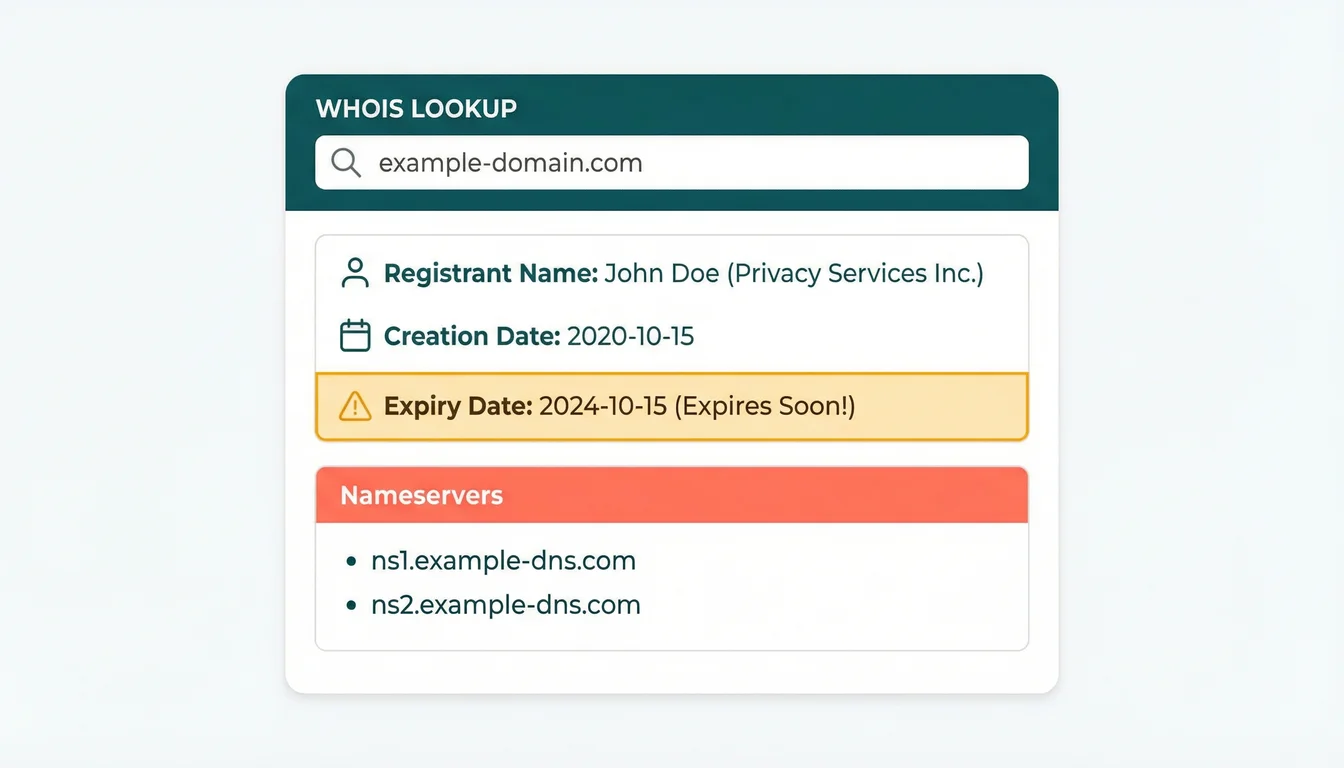
Not all "taken" domains are the same. Before you do anything else, run a WHOIS lookup on the domain. What you find changes your strategy completely.
Active business using it daily. This is the hardest scenario. The owner relies on the domain for their livelihood. You can still approach them, but expect to pay a premium or hear "no."
Parked page full of ads. Good news. This domain is held by an investor who bought it specifically to sell. They want to hear from you. The price is negotiable.
Expired or suspended. Better news. The domain might be entering Nominet's deletion cycle, which means you could grab it for as little as £35 through a backorder service. More on that below.
A company that clearly went under. Check the WHOIS registration dates. If the domain hasn't been renewed recently and the website is a blank page or shows hosting errors, it might drop soon.
Quick Wins That Won't Cost You a Penny
Sometimes the best move isn't fighting for the taken domain. It's finding something better.
"It's a one-time cost to come up with a great name for your startup, but the benefit is forever."
Dharmesh Shah, Co-founder of HubSpot, via LogoMaker
I've thought about that quote a lot over the years. Running a domain registration service since 2002, I've watched hundreds of businesses agonise over names. The ones who spent a bit of time finding the right fit from the start almost never regretted it. The ones who settled for a "close enough" domain? They'd come back two years later wanting to rebrand.
Here's what actually works as an alternative:
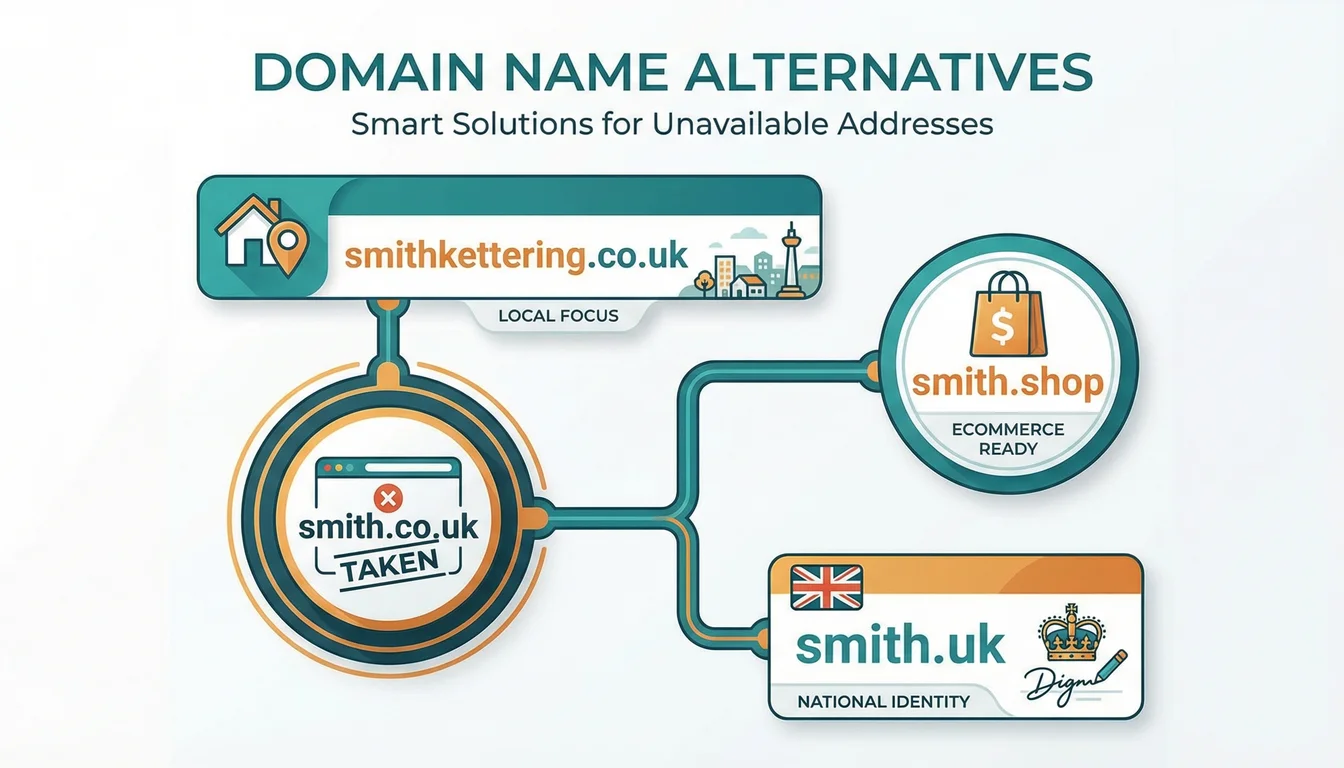
Add your town or region. If smithplumbing.co.uk is taken, try smithplumbingkettering.co.uk or smithplumbingnorthants.co.uk. For local businesses, this doubles as an SEO signal. Customers searching "plumber Kettering" will see you.
Add an action word. Prefixes like "get," "try," "hello," or "go" keep your core brand intact. getsmithplumbing.co.uk passes the radio test and tells people exactly what to do.
Try the other UK extension. If the .co.uk is taken, the .uk version might be free (and vice versa). There are 8.4 million .co.uk registrations but only 1.4 million .uk registrations, so the shorter version is often available.
Look at industry-specific TLDs. Extensions like .shop, .agency, .tech, and even .plumbing exist, and ICANN is about to approve a lot more in the 2026 new TLD application round. And before you worry about SEO, Google has been clear on this:
"Our systems treat new gTLDs like other gTLDs (like .com and .org). Keywords in a TLD do not give any advantage or disadvantage in search."
Google Search Central, Multi-regional and multilingual sites documentation
That quote put to rest a misconception I'd been hearing from customers for years. People assumed a .shop or .tech would tank their rankings. It won't. What matters is the content and authority of the site, not whether it ends in .com or .photography. The extension is branding, not an SEO lever.
What NOT to Do
Don't add hyphens. This advice was everywhere in the early 2000s when SEOs thought hyphens helped separate keywords. In 2026, my-local-bakery.co.uk looks spammy, confuses anyone who hears it out loud, and guarantees lost traffic to whoever owns mylocalbakery.co.uk.
Don't use creative misspellings. Flickr pulled it off. Tumblr pulled it off. Your plumbing company in Corby won't. Misspelled domains confuse customers and make your business harder to find.
Don't assume you can sue your way to a domain. Unless the current owner is actively infringing on your established trademark in the same commercial sector (cybersquatting), you've got no legal claim. The fact that your new business name matches a domain someone registered years ago doesn't give you rights to it.
Buying a Domain from Someone Else
If you've set your heart on a specific domain, buying it from the current owner is always an option. The question is what it'll cost.
At the top end, UK domain sales can reach staggering figures. Brandwise's records show Money.co.uk sold for £1.2 million, Cruises.co.uk for £1.1 million, and Gold.co.uk for £600,000. These are dictionary-word, category-defining names.
For most UK small businesses, though, the reality is far more modest. Expect to pay somewhere between £500 and £5,000 for a decent .co.uk from the aftermarket. Generic single-word domains cost more. Two-word combinations with your business name are often surprisingly affordable.
Use a broker if the domain matters. Approaching a domain owner directly reveals your identity, and a seller who knows you're a funded startup will price accordingly. Brokers negotiate anonymously and typically charge 10-15% commission. That fee often pays for itself in a lower purchase price.
Or reach out directly. Run a WHOIS lookup to find the registrant's contact details. Some domain owners list a "for sale" page or have a contact form on the parked domain. A polite, direct email works more often than you'd think.
One thing to watch: big registrars push their own broker services, often at inflated commissions. GoDaddy, for instance, charges up to 20% through their in-house brokerage. You're paying more for the same negotiation you could do through an independent broker for less.
Drop Catching: How to Grab an Expiring .co.uk for £35
This is the strategy most big registrars don't mention, because there's nothing for them to upsell.
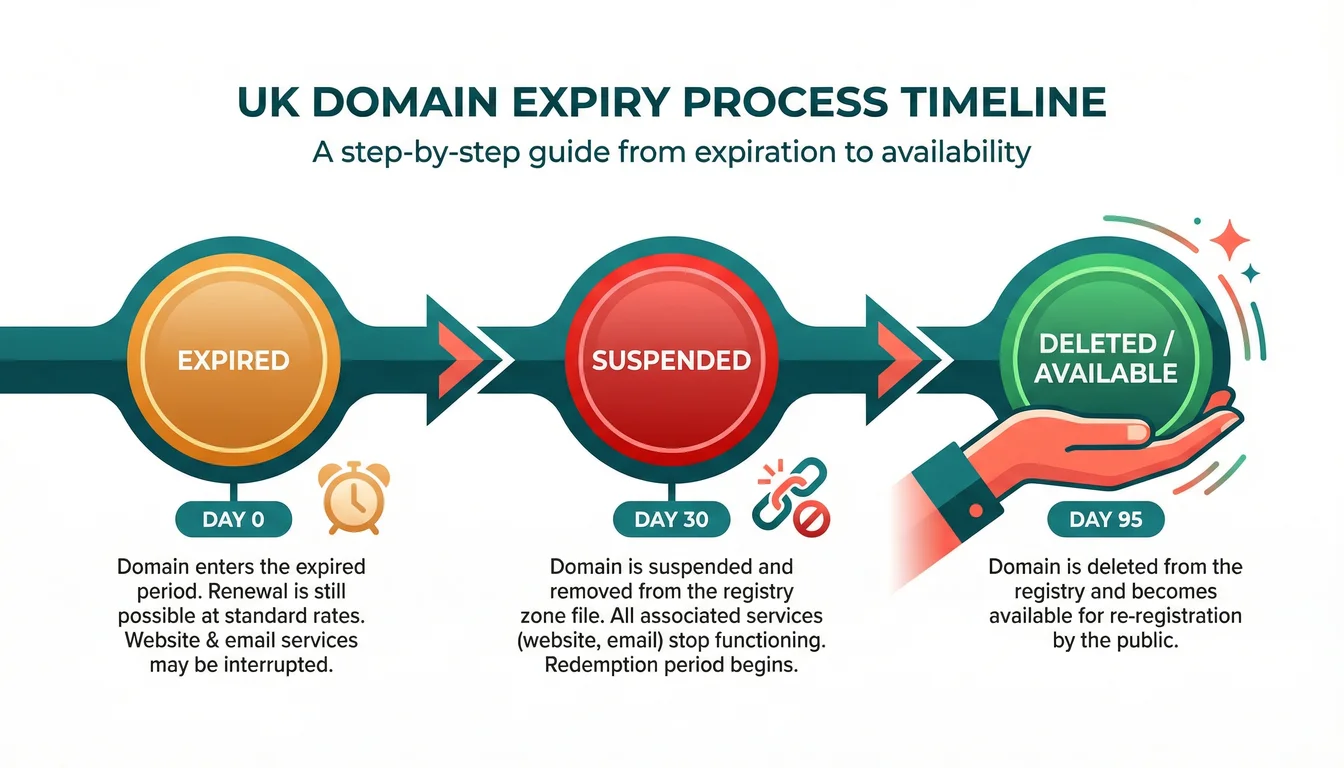
When a .co.uk or .uk domain expires and the owner doesn't renew, Nominet follows a fixed timeline:
| Day | Status | What Happens |
|---|---|---|
| Day 0 | Expired | Domain expires but can still be renewed normally |
| Day 30 | Suspended | All services stop (website, email). Still renewable. |
| Day 95 | Deleted | Domain is removed from the registry and available to register |
At day 95, the domain becomes available to anyone. Drop catching services like dropped.uk and catchable.co.uk attempt to register the domain the instant it's deleted.
Here's how it works in practice:
- Find a suspended domain via WHOIS lookup (check its expiry date)
- Place a backorder on a drop catching service (free to place)
- If you're the only person who backordered it, you get it for a flat fee of £35 (including VAT and transfer)
- If multiple people want it, it enters a 3-day auction starting at £35
No catch. No hidden fees. The services only charge if they successfully register the domain for you. Compare that to a broker quoting £2,000 for the same domain. Once you've secured it, transferring the domain to your preferred registrar is straightforward.
When to Walk Away
Sometimes the right call is to stop chasing the domain and build your brand around something else.
If you're spending more energy fighting for a domain than building the actual business, that's your signal. A memorable .co.uk with a town modifier can rank just as well as the exact-match version, and customers won't know the difference once they've visited your site.
Companies rebrand all the time. Google started as BackRub. Nike started as Blue Ribbon Sports. The business matters more than the domain. Pick something you can register today, build on it, and if the dream domain drops in two years, grab it then.
Frequently Asked Questions
Can I buy a domain that already has a website on it?
Yes. Every domain is potentially for sale if the owner is willing. Contact them directly via WHOIS details or hire a broker to negotiate on your behalf. Active business sites are harder to acquire, but parked domains (showing ads or "for sale" pages) are usually held specifically for resale.
How much does it cost to buy a domain from someone else in the UK?
Most UK .co.uk aftermarket domains sell for £500 to £5,000. Generic single-word domains cost more (Tyres.co.uk sold for £300,000 in 2025). Drop catching an expiring domain starts at just £35 through services like dropped.uk.
Do alternative domain extensions like .shop or .tech hurt my SEO?
No. Google treats new gTLDs like .shop, .tech, and .agency the same as .com or .co.uk for search rankings. Your domain extension is a branding decision, not an SEO factor. Content quality and site authority determine rankings.
What is domain drop catching?
Drop catching is registering a domain the moment it's deleted from the registry after expiry. For UK domains, Nominet deletes expired domains 95 days after expiry. Backorder services attempt to register the domain at the exact deletion time, typically for a flat fee of £35.
Should I use hyphens in my domain name?
No. Hyphenated domains fail the "radio test" (try saying my-local-bakery.co.uk out loud), look spammy, and guarantee lost traffic to the non-hyphenated version. Use a modifier word like "get" or "try" instead.
Can I trademark a domain name to force a transfer?
Owning a trademark doesn't automatically entitle you to a matching domain. You can file a dispute through Nominet's DRS (Dispute Resolution Service) only if the current owner registered the domain in bad faith and it's identical to your established trademark. New businesses without prior trademark use have very limited grounds.
How do I check when a domain expires?
Use a WHOIS lookup tool and check the "Expiry Date" or "Registry Expiry Date" field. For UK domains, subtract 95 days from the deletion date to find the original expiry. If the domain is suspended, it could drop within weeks.
Need a Domain for Your UK Business?
Search from over 460 extensions with transparent pricing. No hidden renewal hikes, no bait-and-switch, and free DNS management on every domain.
Search Domain NamesSources
- The Domain Name Industry Brief Q3 2025 - DNIB.com
- UK Domain Statistics - Nominet
- Biggest UK Domain Name Sales - Brandwise
- Drop Catching and Domain Backordering - dropped.uk
- Domain Expiry Process and Drop Lists - Nominet Registrar Resources
- John Mueller on Keyword Domain Names and Branding for SEO - Search Engine Journal
- Quotes for Startups from Dharmesh Shah - LogoMaker
Published: · Last reviewed: · Written by: Mark McNeece, Founder & Managing Director, 365i
Editorially reviewed by: Mark McNeece on · Our editorial standards